
Swim platform davit · Baybring QuickRest
The tender comes along.
Across the swim platform, in harbour and at sea.
Made in Sweden.
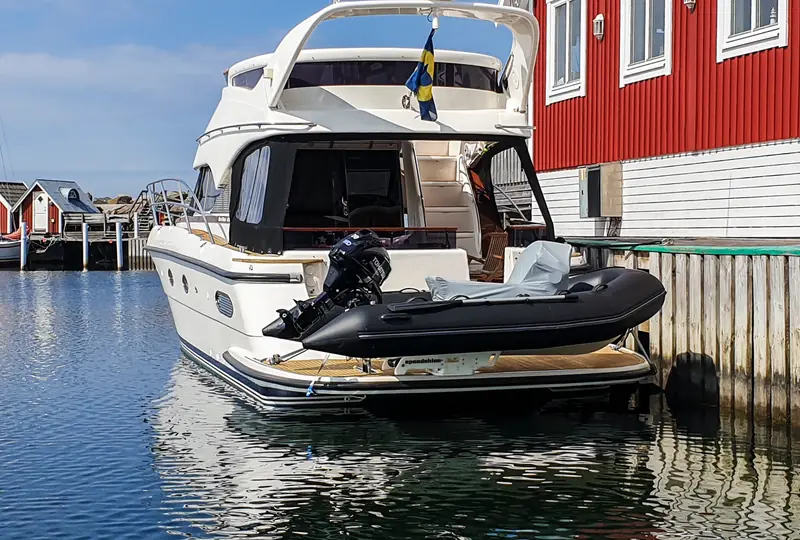
It almost seems to float.
Once the tender is up, you lift off the winch arm and take it apart, so it is easy to stow. All that is left on the swim platform is the cradle and the tender.
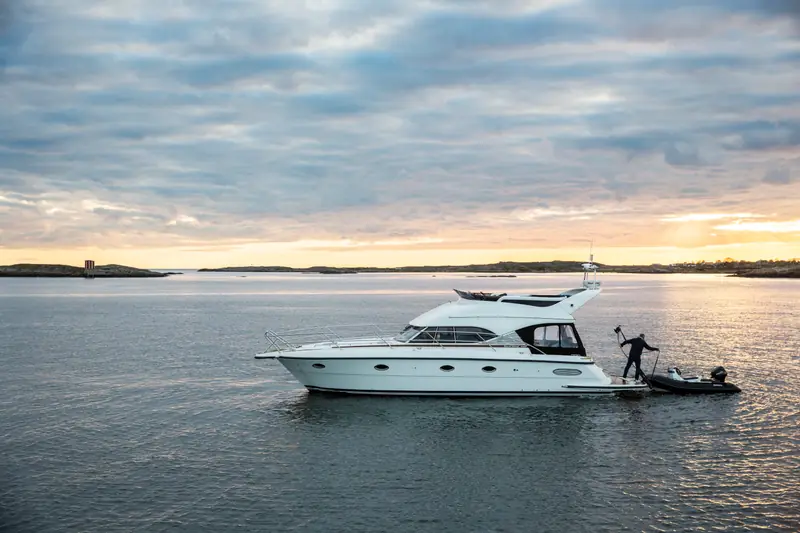
How it works
- The winch arm goes into the square tube on the cradle, and the cradle is turned and tilted down towards the water. The hook is attached to the bow eye of the tender.
- The winch pulls the tender up onto the cradle, bow first.
- Once the centre of gravity has passed the pivot point, the cradle settles down. At the same time the tender turns a quarter turn, so that it ends up across the swim platform.
- The tender lies across the swim platform, with a large part outside the edge. It is strapped down to its own fixings in the swim platform, on Special to the eye bolts on the mounting plate. Never to the cradle.
Davit, boat lift or tender lift?
Call it what you like. QuickRest pulls the tender up onto a cradle and turns it into place across the swim platform. It takes inflatables, tenders and RIBs with an outboard, and jet skis, up to 300 kg. The box contains the cradle, winch arm, winch, mounting plate and mounting points.
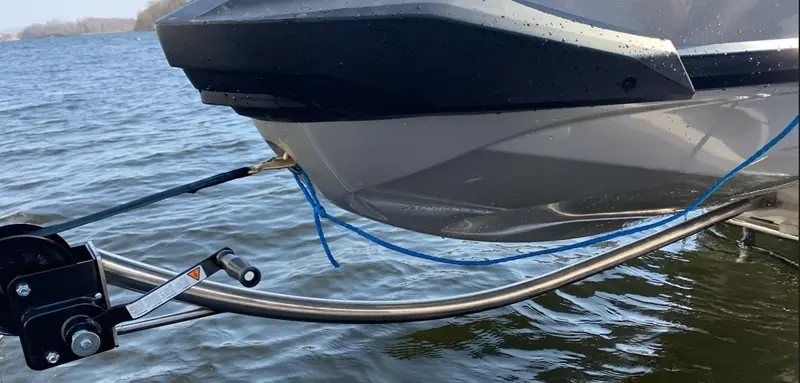
The last stretch should not be a struggle.
The curved arm keeps the winch high, so the pull runs straight to the hook all the way up instead of pressing the tender down at the end. It takes less effort. And with the winch higher up, the arm clears the boat more easily when the cradle turns, so the swim platform does not need to be as deep.
Will it fit my boat?
Measure the depth of the swim platform — from the transom to the outer edge of the platform.
The range
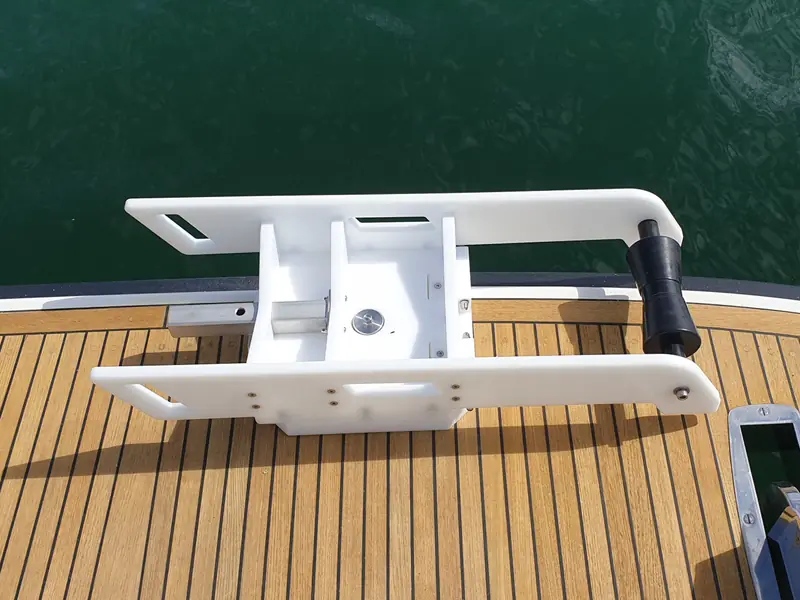
Baybring QR 250 Standard, white
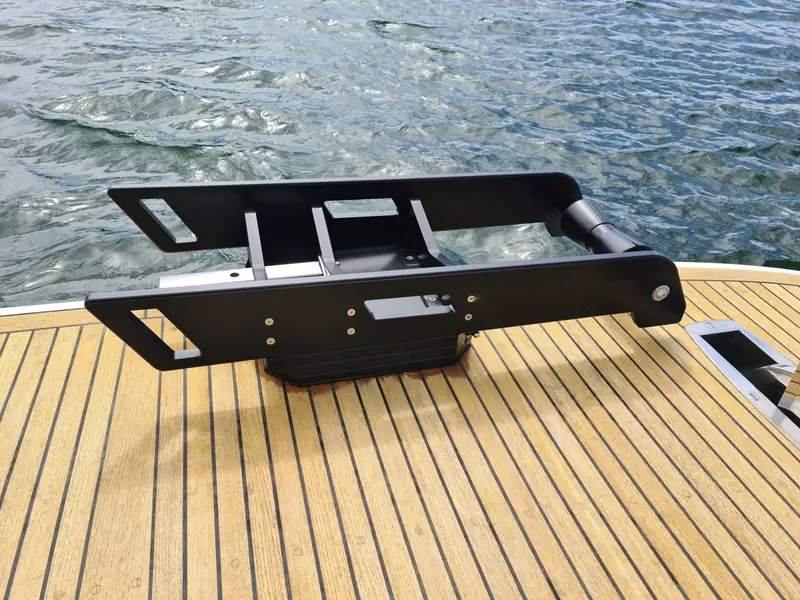
Baybring QR 250 Standard, black
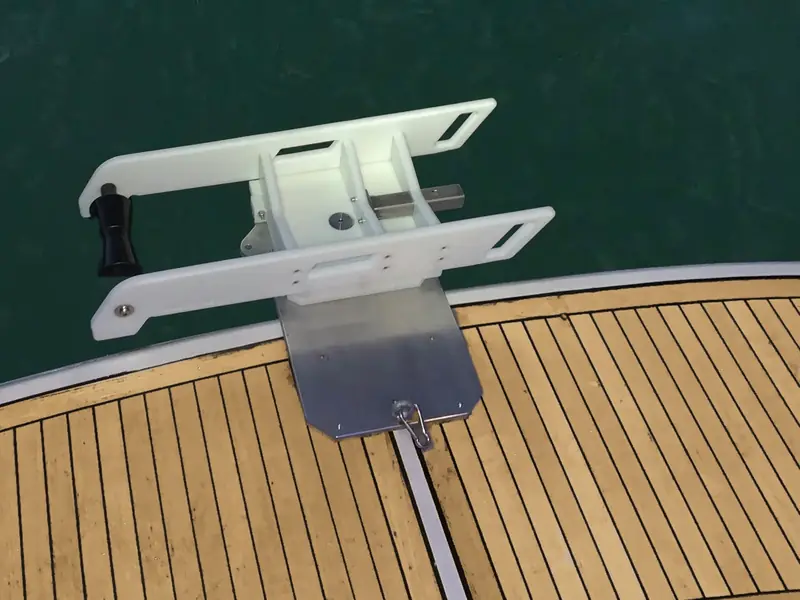
Baybring QR 250 Special
The price in EUR is approximate, converted at the exchange rate of 15 October 2026. You pay in SEK.